ASB Incidents
Pin-pointing crimes on a map helps us to identify problem areas.
But more meaningful insight can be gathered by visualising the data in different ways.
Cluster Analysis
Creating clusters for neighbouring incidents can identify locations with high occurrences.
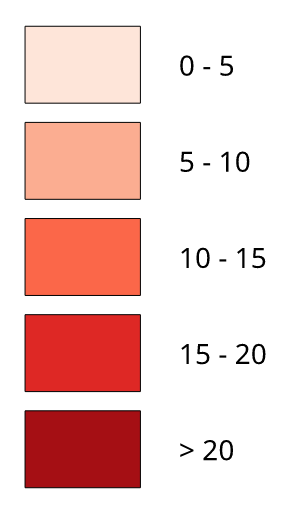
Choropleth Maps
Thematic maps with administrative or political boundaries are another approach.
Hot Spot
A Hot Spot can identify small geographical areas where crime has occurred more often.
Hot spot policing involves increasing visible patrols in these areas. This discourages offenders from taking advantage of opportunities to commit crime.
Increasing visible patrols can increase certainly of being caught and deter potential offenders.
Hot Spot Analysis
This area is identified as a hot spot.
Therefore, more visible patrols in this area can act as a deterrent.
Dispersal Powers
A dispersal zone maybe be authorised to give the police the power to ask citizens to leave a designated area.
This can help to reduce the likelihood of the Antisocial behaviour.